
“The experience of motherhood brings a kinship with life which is not available to men…the need to love, to protect, to nurture, and to assume responsibility… the very elements needed for…growth”
C.G. Moser, ‘Understanding Girls’, 1957
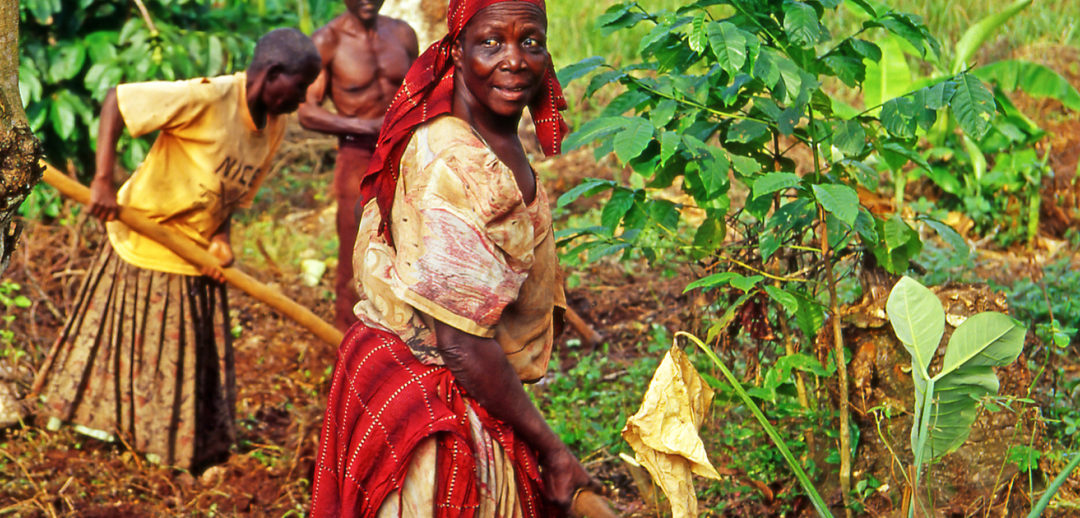
While it is true that, generally, Nigerian women are denied the opportunities of men, there are variations in the opportunities available to women based on which part of the country they are located. The challenge faced by women in the North, again, in the most part, borders on such realities as less formal education, early teenage marriages, confinement to the household. While women in the South do not face similar challenges, their economic contribution to society, including as heads of many households, is not fully recognized whereas their independent economic contributions as farmers, traders, professionals etc. is critical to the sustenance of society.
They are not just wives, mother, daughters, sisters or widows. They are, very largely speaking, at the same level with the menfolk in terms of contribution, albeit mostly off the official radar and, therefore, not fully captioned in GNPs. In Legal Theft – The Problem with Nigeria (2015), I wrote “Where then is true development? Development must be seen as a normative concept synonymous with improvement: the world cannot be said to be experiencing development as long as a system of exploitation is in place anywhere.
As long as economic and development discourse ignores women, ‘minorities’ and ‘poor’ people’s contributions to value, as long as their contributions remain outside of the ‘market’ and price/value allocation and therefore outside of the sacred GNP radar, so long will global/local provision for real and true equitable development diminish: the development system cannot respond to values it refuses to recognize. We must factor in fully the black market, the informal sector, the parallel economy where most poor people assure their livelihoods, thereby supporting socioeconomic systems and, by consequence, provide shadow subsidy to economic growth. GNP measures only the tip of the iceberg of human production. It does not therefore measure value and cannot continue to be used as the yardstick of development.
We must go beyond and behind the boundaries of formally recognized markets. In other words, we are currently not measuring the real backbones of economic growth, because economists of capitalism do not value them. This is exploitation at its crudest. It benefits those whose profit derives from maximizing free labor, the rulers of capital backed by their reductionist social scientists. It is a development for the rich that is rooted in an underdeveloped poor which includes, ultimately, the middle class in a global struggle for survival of the fittest, of the most coldly exploitative.
The time has come to reverse this trend because it can only ultimately lead to the annihilation of humanity. The global system is overheated already. The clamor for correction is all over the place and it is getting more and more strident and violent as manifested in the number of violent conflicts going on around the world (Seers (1979); Warring (1982): Kabeer 1994:76-79; Prakash 1994:1487, 1489).”
It is with the above background that the work of GiveCare organization, founded by Scholastica Wilson, and with which I am very familiar, becomes relevant towards bridging the gaps highlighted above, by their recognizing women’s special and specific economic skills and input, as well as supporting women’s empowerment both for the women’s own improvement and wellbeing as well as to enable them contribute to growing the economy in a more conscious, focused and impactful way. I strongly encourage support for the critical, cutting edge and pivotal work of GiveCare for women in Nigeria and Africa.
Olajide Olagunju
amazon.com/author/olajideolagunju
Olajide,
Thank you for sharing this article with us. The value of creating an inclusive economy to Africa’s growth and development cannot be overemphasized. It is critical that Nigeria and communities in Africa continue to find ways to forster gender equity in resource sharing and economic development activities.
Thanks for drawing attention to the fact that women can be a great force for economic growth and other developmental course if they are valued, given equal opportunities just like their male counterparts. Women in developing countries like Nigeria and other parts of Africa need to be valued so that they can be bold to use their talents and great skills to impact the world.