
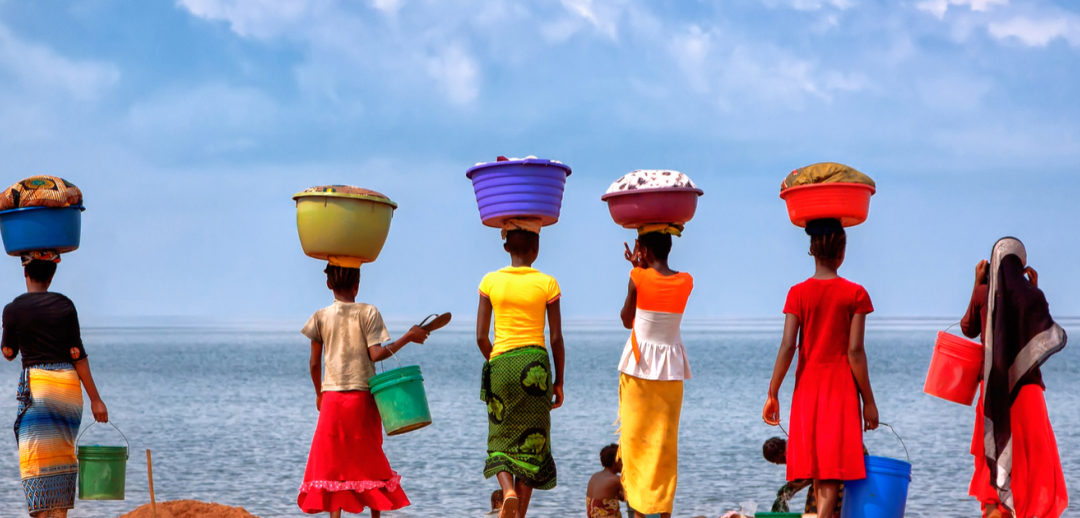
EMERGING MARKETS LOOKING GOOD
What makes emerging markets in Sub Saharan Africa inviting to investors all over the world is the opportunity presented by the large population and the size of the youth demographic compared to the others. The sheer volume of people in emerging markets in Africa is very enticing to entrepreneurs and Investors.
HERE IS THE PROBLEM
Here is a paragraph from a world bank article on Financial inclusion: “Two billion people — or 38% of adults in the world — do not use formal financial services1, and 73% poor people are unbanked because of costs, travel distances and the often-burdensome requirements involved in opening a financial account. Their ranks include more than half of adults in the poorest 40% of households in developing countries.”
FINANCIAL EXCLUSION
Kelechi lives in Owerri Nigeria with her husband and their 5 kids. She is a really good seamstress and makes cloth es for the locals in Owerri. She has a fantastic gift and the people in her community enjoy the benefits very much. Kelechi is financially excluded because:
- She does not have a bank account
- She can only Accept Cash payments
- Sales are limited to her local community
- She has no access to funds to scale her small business
- She has no computer but has a mobile phone
- She has no access to the internet
THE INFORMAL SECTOR
Kelechi does not know this, but she is part of a massive group called the “Informal Sector” What is significant to note is that the informal sector makes up for 90% of commerce in Africa. Put plainly, 90% of the sales that happens in Africa are with people like Kelechi. They are completely excluded from utilizing the financial and technological services available to other demographics.
Until they are included financially and technologically, the true potential of the emerging markets in Sub-Saharan Africa will never be attained. Success will come from the masses being involved.
Financial Inclusion for Kelechi would mean:
- Access to a bank account,
- A POS to receive card payments
- Access to funding to scale her business
- access to an eCommerce platform to sell her products beyond her local community
- Data on her phone to access the internet
WE ALL SHOULD PLAY A PART IN THIS
“Over the past several decades, different types of financial-services providers have offered new possibilities for the financially excluded. Such providers include non-government organizations, cooperatives, community-based development institutions, commercial and state banks, insurance and credit-card companies, telecommunications and wire services, post offices, and other businesses that provide point–of-sale (POS) access. New business models and providers have, in many cases, become viable due to technological breakthroughs, including the worldwide spread of mobile phones.
— Excerpt from the World Bank
This is truly a problem. Kelechi, and people like her will benefit from financial inclusion. It is also important to note that the people around these entrepreneurs will also have to see the need for these services for the whole community to thrive.
Ekwii thank you for your comments. You touch on an important issue, which is the importance for people around entrepreneurs like Kelechi to see the need for these services. Educating the community is key for financial inclusion to succeed. This is why GiveCare is committed to bringing financial education to communities in need.
Thank you for your article dated August 15, 2017 on “Imagine Financial Inclusion”. Business owners like Kelechi who are considered to be part of a group called “Informal Sector” must definitely, in my opinion be educated about the importance of financial inclusion and in utilizing technology. I think seminars for example, can be held in entire communities. This I think could not only educate the communities but connections could be made in such meetings. For example, Kelechi could meet someone who is “technologically savvy” and partner with them in order to grow her business. I think locals should be encouraged to trust the banks as well. Yes! I can “imagine financial inclusion”
It will be great to have people like Kelechi (who have skills and are dedicated to their work) to be financially included. It gives them a sense of recognition by the work sector, and this to them is great accomplishment and success. Success does increase production which in turn is good for the economy.
What stikes me most about poverty are the multiple barriers experienced by those living with it.
Most people in developed economies with easy access to online financial transactions do not give much thought to how challenging life would be without something as basic as a bank account or easy access to an ATM
I love that this project seeks to use available technology (mobile phones) as a way to address the various barriers & begin to level the playing field.
Keep up the good work
Folu,it is amazing you use the phrase “level the playing field”. This is critical to removing the obstacles that keep the poor stock in the vicious cycle of poverty.